

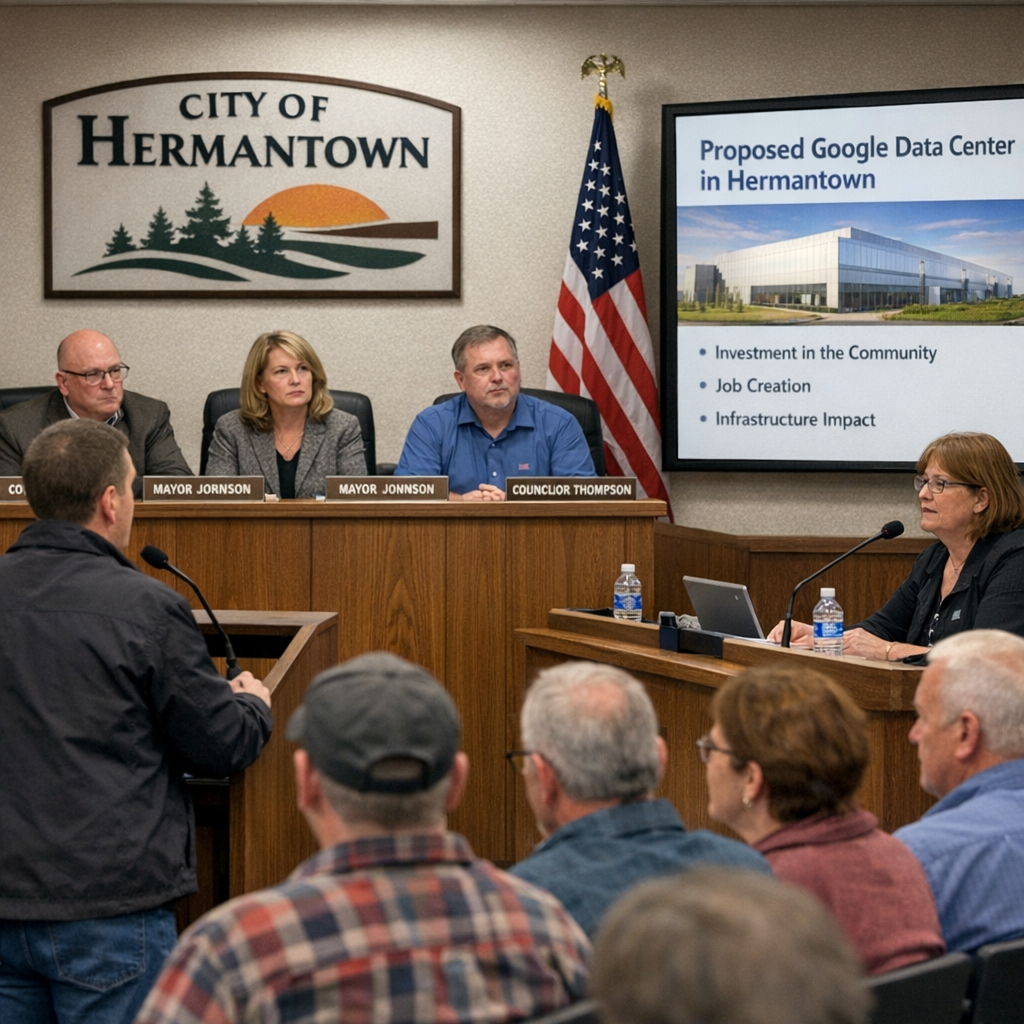
Hermantown is currently at the center of a significant community discussion regarding the proposed construction of a Google data center. The project has elicited a range of responses from residents, highlighting concerns about zoning changes, environmental implications, and the level of public participation in the decision-making process.
Project Overview
In March 2026, it was publicly disclosed that Google is the entity behind the proposed data center in Hermantown. The facility is planned for a 200-plus acre site in the southwest corner of the city, adjacent to Proctor and Duluth. The location was chosen for its energy-efficient climate, skilled local workforce, and the resilient power grid provided by Minnesota Power.
Community Concerns
The announcement has led to the formation of the grassroots group ‘Stop the Hermantown Data Center,’ which has filed lawsuits against the city. The group alleges that the city violated spot-zoning restrictions by rezoning the Adolph neighborhood from residential to business-manufacturing to accommodate the data center. They also claim that the city’s comprehensive plan was drafted and approved in secrecy, circumventing Minnesota’s open meeting laws.
Residents have voiced apprehensions about potential environmental impacts, including increased noise levels and energy consumption. Some community members feel that the project has progressed without adequate public input, leading to a sense of exclusion from decisions that affect their neighborhood.
City’s Position
City officials have engaged in discussions about property tax reductions and exemptions for the proposed data center. The Economic Development Director stated that Google would pay its taxes in full during the project, with the city returning a majority of that payment over 28 years. The city emphasizes that the project could bring economic benefits, including job creation and increased tax revenue.
Looking Ahead
The Hermantown City Council has held public hearings to address the development and tax abatement agreements with Google. These meetings have provided a platform for both supporters and opponents to express their views. The council is expected to revisit the proposal in upcoming sessions, aiming to balance economic development with community concerns.
As the situation evolves, it remains crucial for residents to stay informed and participate in public discussions to ensure that the development aligns with the community’s interests and values.